
Rain changes more than the site schedule. It affects panel handling, storage, cleaning, support checks, concrete surface expectations, and the speed at which a formwork team can prepare for the next pour. For contractors and importers working in tropical or coastal markets, choosing hollow plastic formwork for rainy-season construction should therefore involve more than asking whether a panel is “waterproof.”
A better procurement question is: Will this formwork system remain practical and predictable under our actual combination of rain, humidity, concrete pressure, handling methods, and reuse plan? This guide explains how to evaluate that question before placing a commercial order.
Why rainy-season formwork selection needs a project-level review
Traditional wood-based panels can be sensitive to prolonged wetting, especially around damaged faces, cut edges, and fastening points. Plastic formwork does not behave like plywood, but that does not mean every plastic panel or every support arrangement is automatically suitable for every wet-season pour.
Procurement teams should assess the complete working system:
- panel material, thickness, internal structure, and edge construction;
- backing, joist, tie, and support spacing designed for the pour;
- cutting and fastening practices used by the site crew;
- cleaning, drainage, stacking, and transport between pours;
- the desired concrete finish and tolerance;
- local temperature, rainfall pattern, wind exposure, and storage conditions.
The goal is not to buy the panel with the strongest marketing claim. It is to select a panel and method that the engineering and site teams can use consistently.
What moisture resistance can—and cannot—solve
A plastic panel’s low water absorption can be valuable on wet jobsites because the panel itself is not dependent on a wood veneer face. That can simplify cleaning and reduce one common source of moisture-related panel deterioration. It can also make plastic formwork worth evaluating for basements, slabs, walls, drainage work, and projects with exposed storage areas.
However, moisture resistance does not remove the need for basic controls. Rainwater can carry cement slurry and grit across the panel face. Standing water between stacked sheets can trap debris. Mud can damage the concrete finish if it is not removed. Wet working platforms also increase handling risks. In addition, formwork pressure and deflection remain structural issues; they must be addressed through the selected panel thickness and a project-approved support plan.
Buyer takeaway: treat “waterproof” as one material characteristic, not as a complete rainy-season method statement.
Seven checks before buying hollow plastic formwork for a humid climate
1. Confirm the intended structural applications
Tell the supplier whether the panels are intended for slabs, shear walls, columns, beams, foundations, or multiple applications. Share pour height, concrete placement method, expected fresh-concrete pressure, support layout, and finish requirements with the responsible engineer. A supplier can recommend a product configuration, but the final support and pour design must be approved for the project.
PG FORMWORK lists reusable hollow plastic formwork for several concrete applications on its Products page. Buyers should still request written confirmation for their own application instead of assuming that one thickness is universal.
2. Request a representative sample, not only a small offcut
An offcut can show material color and internal structure, but a larger sample is more useful for testing cutting, fastening, edge behavior, cleaning, and surface finish. Ask whether the sample represents the same specification proposed in the quotation. Record the sample thickness, weight, surface condition, edge design, and identification so it can be compared with the production shipment.
3. Inspect faces, edges, and hollow channels
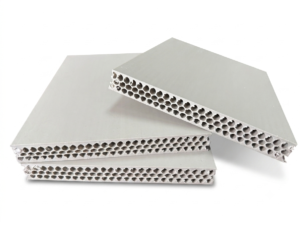
Check whether the sheet is flat, whether the faces have visible damage, and whether the internal channels and solid edges are consistent. Ask how cut edges or exposed channels should be sealed when required. Four-sided sealing, custom dimensions, and repair methods may be relevant depending on the use plan; these options should be confirmed in the purchase specification, not assumed.
Buyers can review the current plastic formwork range before sending their target dimensions and application details.
4. Validate fastening and support spacing in a trial bay
A controlled trial is the most useful bridge between a sample and a bulk order. Build a representative bay using the proposed cutting tools, fasteners, backing system, ties, and support spacing. Inspect alignment before pouring, monitor the form during placement, and record the concrete finish after stripping.
Do not copy generic spacing figures from a sales page. Required spacing depends on panel properties, thickness, pour conditions, and the engineered formwork design. If the supplier cannot explain what information is needed to make a recommendation, that is a procurement warning sign.
5. Define wet-weather cleaning and stacking procedures
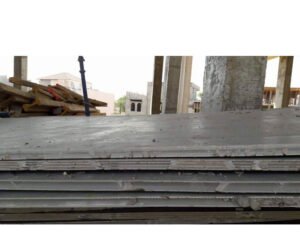
After stripping, remove concrete residue using methods approved for the panel. Avoid aggressive tools that could gouge the face. Let water drain, remove grit before sheets are stacked face-to-face, and place the stack on a level base with suitable supports. Secure panels against wind and site traffic.
Moisture-resistant panels still need organized storage. A written routine should specify who inspects panels, how damaged sheets are segregated, and how cutoffs are stored for later reuse.
6. Agree on acceptance criteria for the shipment
Before ordering, define measurable checks such as dimensions, thickness tolerance, panel flatness, face condition, edge construction, color if relevant, packaging, and quantity. Confirm which documents accompany the shipment and how nonconforming panels will be handled. Avoid vague requirements such as “high quality” without an inspection method.
7. Compare total working value, not only sheet price
A practical comparison should include landed cost, usable area, cutting loss, labor for handling and cleaning, repair options, storage needs, finish-related rework, and the number of acceptable pours actually achieved under the buyer’s process. Since reuse depends heavily on application and handling, ask suppliers for a trial plan rather than treating a headline reuse number as a guarantee.
Rainy-season site checklist
| Stage | Checks | Record |
|---|---|---|
| Before setup | Panel face clean; supports stable; drainage path clear; wind and rain forecast reviewed | Inspection photo and supervisor sign-off |
| During assembly | Correct fasteners; cut edges managed; joints aligned; support spacing matches approved plan | Trial-bay checklist |
| Before pour | No standing water, mud, loose debris, or damaged panels inside the form | Pre-pour approval |
| During pour | Placement rate controlled; movement, leakage, and deflection monitored | Pour log |
| After stripping | Concrete finish inspected; panels cleaned without face damage; defects separated | Reuse and repair log |
| Storage | Level stack; drainage provided; panels secured from wind and impact | Storage inspection |
Questions to send a hollow plastic formwork supplier
- Which panel specification do you recommend for our application, and what project information supports that recommendation?
- What are the nominal dimensions, thickness, weight, edge design, and available customization options?
- What cutting blades, fastening methods, and repair methods do you recommend?
- How should exposed hollow edges be treated after cutting?
- Which quality checks are performed before shipment, and what tolerances can be stated on the order?
- Can you supply samples from the proposed specification for a trial bay?
- What packaging and loading method protects panel faces and edges during international transport?
- What technical information is needed before discussing support spacing?
For more practical formwork selection and handling articles, visit the PG FORMWORK News center.
How PLASGRAND and PG FORMWORK can support buyer evaluation
PLASGRAND, through the PG FORMWORK site, presents hollow plastic formwork options for contractors, importers, distributors, and project buyers. A responsible evaluation should begin with the buyer’s drawings, application, target dimensions, support concept, finish expectations, order volume, packing requirements, and local site conditions.
Rather than relying on a generic climate claim, ask the PG FORMWORK team to match the discussion to your proposed use and arrange a sample-based assessment. Buyers should place agreed dimensions, tolerances, packaging, inspection points, and any customization requirements into the purchase documentation.
Planning a project in a humid or rainy market? Contact PLASGRAND / PG FORMWORK with your application, drawings, target panel size, estimated quantity, destination, and trial requirements. The team can then prepare a more relevant product discussion and quotation.
Frequently asked questions
Is hollow plastic formwork waterproof?
Plastic formwork is generally selected partly because the panel material has low water absorption compared with wood-based panels. Buyers should still confirm the exact product specification and use proper cleaning, stacking, and site drainage procedures.
Can hollow plastic formwork be used during the rainy season?
It can be evaluated for rainy-season work, but suitability depends on the panel specification, engineered support system, pour method, site safety controls, and handling routine. A representative trial bay is recommended before a large order.
Does rain affect the concrete finish?
Rainwater, mud, grit, standing water, joint leakage, and uncontrolled concrete placement can all influence site results. Inspect and clean the form before the pour, and follow the project’s concrete and formwork procedures.
How should plastic formwork be stored in humid conditions?
Clean the panels, allow water to drain, stack them on a level supported base, keep grit away from panel faces, separate damaged sheets, and secure the stack against wind, impact, and site traffic.
What should importers verify before ordering?
Verify the quoted specification, dimensions and tolerances, panel condition, edge design, sample consistency, packing method, shipment inspection criteria, application guidance, and the process for handling nonconforming goods.