
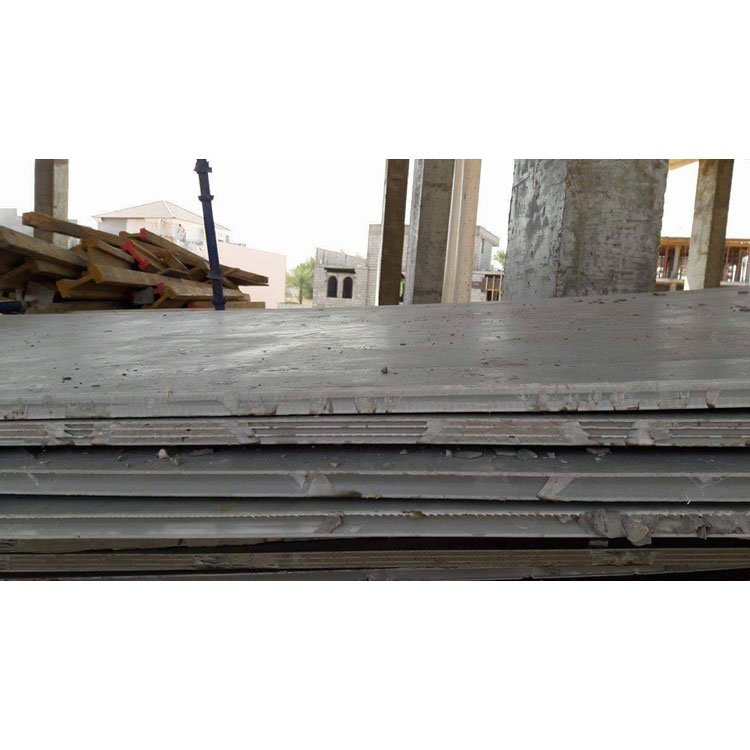
A fixed reuse number does not tell a site team whether a particular formwork panel is ready for the next pour. The useful question is more specific: after stripping, what condition is this panel in, what caused the observed damage, and who is authorized to approve its next use?
A practical hollow plastic formwork inspection should happen in two stages. The first check is made immediately after stripping, before material is mixed into a general stack. The second is made after controlled cleaning, when concrete residue no longer hides scratches, punctures, edge damage, or profile distortion. The result should be a traceable decision: reuse, repair and re-inspect, place on technical hold, or retire from formwork duty.
This guide is written for formwork subcontractors, site quality teams, distributors, and buyers using reusable panels across repeated pours. It focuses on panel condition and handling. It does not replace the project-specific design, erection, bracing, shoring, tie, stripping, or reshoring decisions for the complete formwork system.
Why Inspection Must Start Before Cleaning
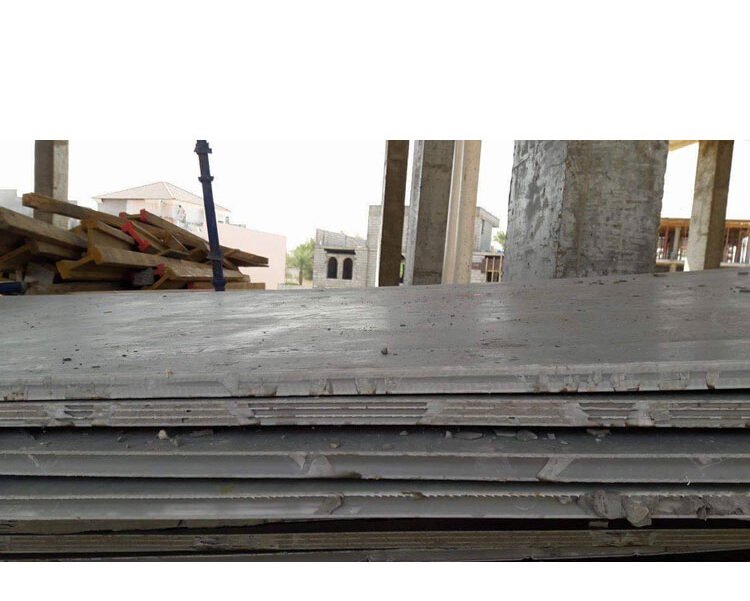
Concrete residue is not only a cleaning issue. Its location can help explain what happened during the pour. A thick line along a joint may indicate a gap, movement, poor alignment, or an unsuitable sealing detail. Local buildup around a penetration may point to an unapproved hole or a weak repair. A damaged edge may reveal that the panel was levered against a hard point during stripping.
If crews scrape everything immediately and mix all panels into one stack, they lose evidence. A quick pre-cleaning check should therefore record:
- panel identification or stack number;
- the concrete element and pour area where it was used;
- the panel face and orientation;
- locations of heavy residue, grout lines, punctures, or impact marks;
- any unusual stripping force, dropped panel, or site incident;
- photographs with a scale or reference object.
The U.S. Occupational Safety and Health Administration states that formwork and shoring must be designed, supported, braced, and maintained for the anticipated loads. It also requires form removal to wait until the specified conditions are followed or concrete strength has been properly demonstrated. That means a panel inspection cannot make premature stripping acceptable, and a reusable face panel cannot validate damaged shores, ties, frames, or braces.
The Two-Stage Hollow Plastic Formwork Inspection
Stage 1: Immediate post-strip triage
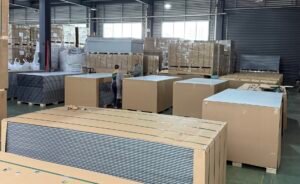
Move the panel to a stable inspection area without dragging the concrete-contact face across the ground. Separate panels with obvious punctures, crushed edges, deep deformation, heat damage, or uncontrolled field modifications. Mark them as on hold so they cannot return to the next assembly by mistake.
At this stage, do not diagnose every defect. The purpose is to preserve evidence, prevent damage from spreading through handling, and keep suspect panels out of the reuse stack.
Stage 2: Post-cleaning condition check
Use cleaning tools and methods confirmed for the supplied panel. Aggressive scraping, impact tools, uncontrolled heat, incompatible chemicals, or excessive pressure can turn removable residue into permanent surface damage. After cleaning, place the panel on a flat, supported surface and inspect it under consistent lighting.
Check the following zones separately:
- Concrete-contact face: scratches, gouges, raised repairs, embedded residue, heat marks, or local polishing that may print through to the next concrete surface.
- Back face: impact marks, unsupported local crushing, attachment damage, and signs that the panel was bearing on an unintended point.
- Factory edges and site-cut edges: splits, crushed flutes, open cavities, loose closures, missing plugs, and damage around fasteners.
- Corners: broken geometry, local buckling, or loss of the corner needed to hold the intended joint line.
- Holes and penetrations: elongation, cracking, unapproved drilling, failed plugs, or repair material standing proud of the face.
- Overall geometry: visible bow, twist, permanent crease, or profile distortion compared with the approved sample or project acceptance method.
Buyers can review available panel types on the PG FORMWORK products page and within the plastic formwork category. Inspection criteria should still be agreed for the exact product, profile, intended concrete finish, and supporting system.
Five Failure Modes the Inspection Should Explain
1. Residue is treated as harmless dirt
Condition: grout or hardened concrete remains at a joint, corner, or repair. Panel/system response: the next assembly cannot seat or align as intended. Impact: the joint may print through, leak paste, or create a local step in the finished concrete. The team should identify the cause before cleaning removes the evidence.
2. Cleaning creates surface damage
Condition: workers use a sharp, hard, or uncontrolled cleaning method. Panel response: the concrete-contact face becomes scratched, gouged, or locally overheated. Impact: a reusable panel may produce visible marks or require a finish-specific review. Cleaning instructions must therefore name approved tools, not only say “clean after use.”
3. A small hole is repaired without checking its function
Condition: a puncture, nail hole, or penetration is filled only to make the face look smooth. Panel/system response: the repair may not restore the edge, rib, fastening, or sealing function affected by the hole. Impact: the next pour may show leakage, repair imprint, or attachment movement. Approval should consider both face quality and the hole’s location in the complete assembly.
4. Distortion is checked while the panel is poorly supported
Condition: a panel is assessed while leaning, bridging an uneven stack, or carrying stored material. Panel response: temporary deflection is confused with permanent distortion, or true twist is hidden. Impact: good panels may be rejected while damaged panels are returned to service. Geometry checks need a defined support arrangement and measurement method.
5. Panel approval is mistaken for system approval
Condition: the face panel looks acceptable after cleaning. System response: damaged frames, shores, walers, ties, clamps, or connections remain outside the panel checklist. Impact: the next assembly may not meet the project design even though the panel face is clean. Panel disposition and complete-system inspection must remain separate records.
Reuse, Repair, Hold, or Retire: A Practical Decision Matrix
| Disposition | Typical finding | Required action | Approval evidence |
|---|---|---|---|
| Reuse | Panel is clean and within the project-approved face, edge, penetration, and geometry criteria. | Label or record as accepted; protect and stack for the next planned use. | Inspector, date, panel/stack ID, next-use class, and photos where required. |
| Repair and re-inspect | Local defect has an approved repair method and does not require an engineering decision. | Record the repair location, material, method, person, and curing or verification requirement. | Post-repair face and geometry check against the approved repair sample or procedure. |
| Technical hold | Cause, extent, system effect, or acceptance limit is unclear. | Quarantine the panel; obtain supplier, temporary-works, QA/QC, or engineer review as appropriate. | Written disposition linked to the defect record and next intended use. |
| Retire from formwork duty | Damage exceeds the approved criteria, cannot be reliably repaired, or makes the next use unsuitable. | Mark permanently, remove from the active inventory, and control any alternate use so it cannot return accidentally. | Retirement reason, quantity, photos, approver, and inventory adjustment. |
There is intentionally no universal scratch depth, bow limit, hole size, or reuse count in this matrix. Those limits depend on the supplied panel profile, the intended finish, the formwork arrangement, and the acceptance criteria agreed for the project. PLASGRAND buyers should request the applicable inspection and repair boundaries for the exact product under review rather than transferring a number from another material or supplier.
A One-Page Record for Every Inspection Batch
A useful record is short enough to be completed on site but specific enough to support a later claim, repair decision, or reorder. Include:
- project, pour location, concrete element, and stripping date;
- panel product/profile, nominal size, batch or delivery reference, and quantity inspected;
- pre-clean photos and recorded stripping or handling events;
- cleaning tool, method, and responsible team;
- defect counts by face, edge, corner, opening, and geometry;
- disposition quantities: reuse, repair, hold, and retire;
- repair procedure reference and post-repair approval;
- next intended element or finish class;
- inspector, reviewer, date, and unresolved questions.
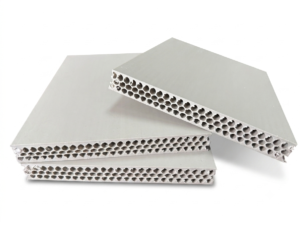
The record should connect the defect to a real panel or controlled stack. A photograph without identification cannot prove which delivery, pour, or product was affected. For a specific panel example, buyers can review the white hollow plastic formwork product page. Related procurement and use guidance is available in the PG FORMWORK news section.
Who Decides What?
The supplier can help identify the product, explain known panel details, and discuss approved repair or replacement options. The site team records actual use, stripping, cleaning, handling, and damage. QA/QC applies the project acceptance plan. The temporary-works designer or other qualified project authority decides whether the complete formwork and support arrangement remains suitable for the anticipated loads.
This responsibility split matters when a defect crosses boundaries. A scratched face may be a finish decision. A crushed profile near a fastening or supported edge may require a different review. A clean panel attached to damaged shoring is not an acceptable system. Conversely, a surface mark does not automatically prove loss of system capacity. The defect location, function, and next use determine the right reviewer.
How PLASGRAND and PG FORMWORK Can Support the Review
PLASGRAND and PG FORMWORK can discuss hollow plastic formwork options with contractors, importers, and distributors at the product-selection and after-sales stages. To make an inspection question actionable, send the product or order reference, panel dimensions and profile, the concrete element, photographs of both faces and the damaged cross-section, a scale beside the defect, the cleaning method, and the proposed next use.
If the issue may involve alignment, pressure, support, fastening, or surface finish, also send the relevant formwork layout, support and tie arrangement, joint detail, concrete placement information, and finish requirement. These inputs help separate a product question from a complete-system engineering decision.
Frequently Asked Questions
Can a hollow plastic formwork panel be approved only by counting previous uses?
No fixed count can replace condition inspection. Previous uses, handling, cleaning, modifications, storage, the next concrete element, and the required finish all affect the decision. Use the supplier’s product-specific guidance and the project’s approved acceptance criteria.
Should inspection happen before or after cleaning?
Both. The pre-clean check preserves evidence about residue patterns, leakage, impact, and stripping damage. The post-clean check reveals the actual face, edges, openings, corners, and geometry.
Does a clean panel mean the complete formwork system is safe to reuse?
No. Panel condition is only one part of the system. Frames, shores, walers, ties, clamps, braces, fasteners, foundations, drawings, and erection condition require their own project-specific inspection and approval.
Can every hole or scratch be repaired on site?
No. Use only a repair method approved for the exact product and defect location. If the defect affects a rib, edge, fastener, joint, sealing function, geometry, or required concrete finish, place the panel on technical hold until the appropriate reviewer confirms the disposition.
What should a buyer send to PG FORMWORK for an after-use review?
Send the order or product reference, panel size and profile, defect location, photos with a scale, concrete element, cleaning and stripping method, quantity affected, intended next use, and any relevant layout, support, joint, or finish information.
Build a Repeatable Panel-Condition Workflow
The best inspection system is not the one with the most complicated form. It is the one that keeps suspect panels out of the next pour, preserves evidence, assigns the right reviewer, and creates data for future purchasing and site training.
For a product and inspection discussion, contact PG FORMWORK and provide your drawings or pour area, panel specification, quantity, destination, photos, defect measurements, cleaning method, next-use plan, and acceptance requirements. PLASGRAND can then respond to the product-specific questions while your qualified project team confirms the complete formwork-system design and site approval.
References and Engineering Boundary
- OSHA 29 CFR 1926.703 – Requirements for cast-in-place concrete
- Use and Re-use of Formwork: Safety Risks and Reliability Assessment, available through CDC Stacks
This article provides a procurement and inspection framework, not a universal repair specification or temporary-works design. Apply the current project drawings, applicable regulations and standards, supplier instructions, finish requirements, and decisions of qualified personnel.